

If you’ve ever admired the elegance of traditional Chinese dress for men, you’re not alone. These outfits carry centuries of cultural history, symbolism, and fine craftsmanship. From ancient robes to modern reinterpretations, Chinese male attire blends grace with masculinity. This guide explores the different styles, their origins, and how to wear them today.
Why Wear Traditional Chinese Dress for Men?
Traditional Chinese clothing for men isn’t just about fashion it’s about culture. Wearing these garments helps preserve ancient artistry and express identity with pride. Many people now embrace them at weddings, festivals, and cultural celebrations. Some even wear Hanfu casually to revive Chinese heritage in daily life.
Choosing a Chinese dress for men connects you with deep-rooted traditions. It represents elegance, respect, and unity in cultural symbolism. Whether you want to honor your roots or appreciate craftsmanship, these garments make a meaningful statement.
Key Styles of Chinese Dress for Men
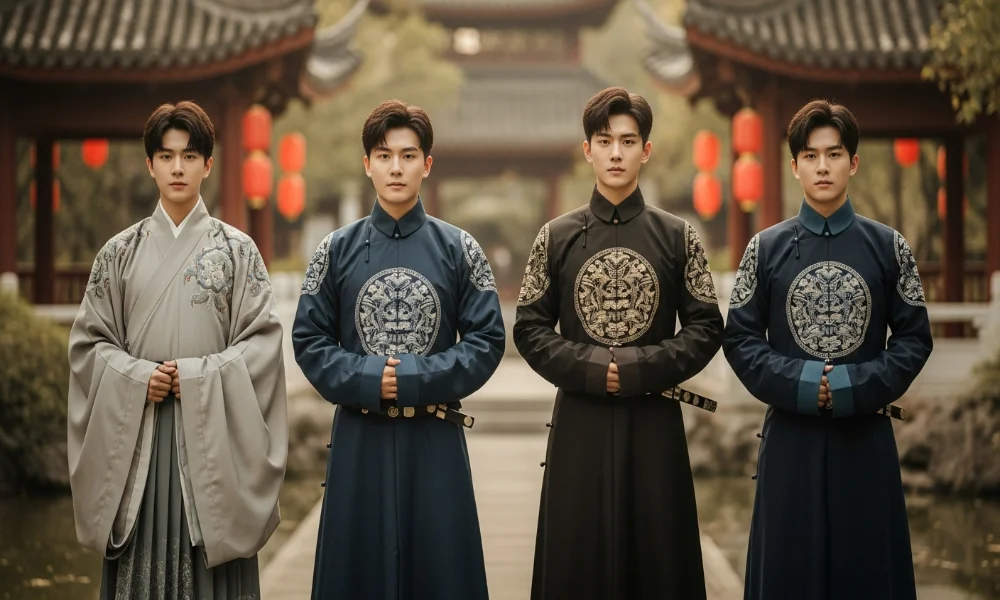
Chinese traditional clothing comes in different styles based on dynasties and regions. Each design reflects distinct eras, philosophies, and aesthetics. Let’s explore the most iconic outfits that shaped Chinese fashion for men through time.
Hanfu (Men’s Han-Style Dress)
Hanfu is the oldest and most symbolic Chinese traditional clothing for men. It dates back over 3,000 years and showcases wide sleeves and cross-collars. This flowing attire was worn by scholars, nobles, and commoners during the Han dynasty. The design emphasizes harmony between body and spirit.
Modern Hanfu outfits are making a comeback in fashion communities. They often mix traditional cuts with modern fabrics for daily wear. You’ll see Hanfu at cultural events, performances, and even casual streetwear today.
Changshan (Long Robe for Men)
The Changshan, also known as the “long gown,” emerged during the Qing dynasty. It’s considered the male counterpart to the female cheongsam or qipao. The robe features a standing Mandarin collar, side slits, and frog buttons. It’s often paired with a jacket for formal occasions.
This style became popular during the late imperial era and early republic period. Today, it’s worn at weddings, ceremonies, and cultural festivities. The Changshan gives a regal yet modest look, symbolizing dignity and refinement.
Tang Suit (Tangzhuang Jacket)
The Tang suit, or Tangzhuang, is a modern adaptation of Chinese jackets. It evolved from the Magua (a short Qing-era coat) into a stylish outfit for men. Its key features include round collars, silk fabric, and embroidered designs. The jacket usually closes with decorative frog buttons.
People wear Tang suits for Lunar New Year, official dinners, and celebrations. The modern Tang suit represents a perfect balance between tradition and contemporary style. It’s also popular as a gift for elders or as a statement of cultural pride.
Zhongshan / Mao Suit
The Zhongshan suit, commonly called the Mao suit, has modern political roots. It was introduced by Sun Yat-sen during the early 20th century. The outfit features four pockets, a standing collar, and symmetrical buttons. It was meant to symbolize equality, discipline, and simplicity.
Today, the Zhongshan suit stands as a cultural and diplomatic symbol. Many leaders and artists wear it to convey sophistication and patriotism. Its neat lines make it timeless and distinctly Chinese.
Daopao, Beizi, and Other Robes
China’s fashion history also includes robes like the Daopao and Beizi. The Daopao, often worn by Taoist priests, features wide sleeves and ankle length. The Beizi, popular during the Song and Ming dynasties, is a long coat worn over other garments. Both reflect elegance, humility, and freedom of movement.
These robes are less common in daily life today but still appear in ceremonies and theatre. Collectors and historians admire them for their fine embroidery and spiritual symbolism.
Comparison of Men’s Chinese Dress Styles
| Style | Era of Origin | Main Features | Common Uses | Symbolism |
|---|---|---|---|---|
| Hanfu | Han Dynasty | Cross-collar, flowing sleeves | Festivals, casual wear | Harmony, grace |
| Changshan | Qing Dynasty | Long robe, frog buttons, collar | Weddings, ceremonies | Dignity, nobility |
| Tang Suit | Modern (Qing-inspired) | Short jacket, embroidery | Celebrations, parties | Luck, respect |
| Zhongshan Suit | 20th Century | Four pockets, symmetry | Official events | Equality, order |
| Daopao / Beizi | Song–Ming Dynasties | Robe or overcoat | Rituals, religious wear | Wisdom, simplicity |
How to Choose the Right Chinese Dress for Men
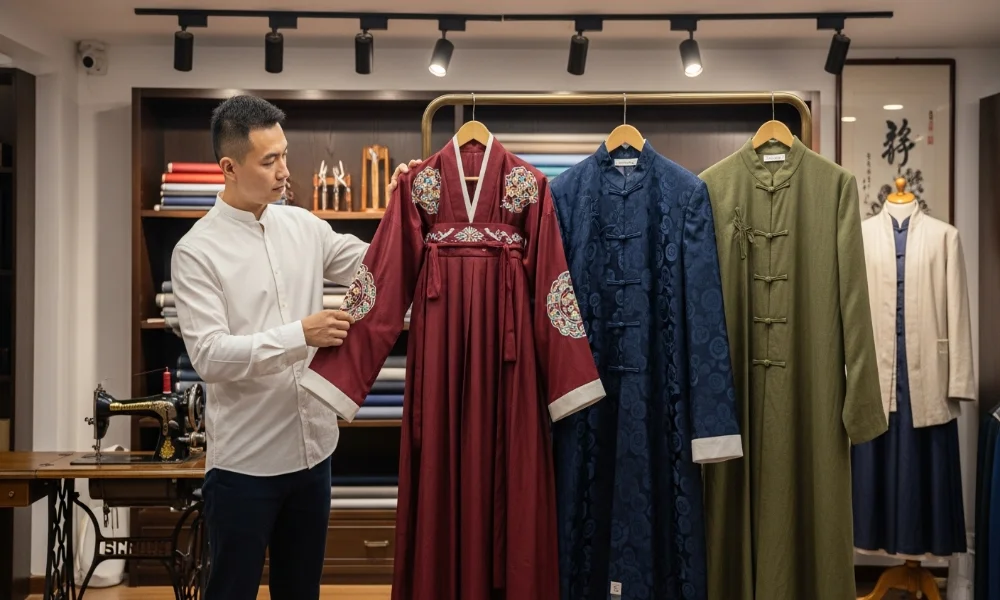
Choosing the right outfit depends on your purpose and comfort. Think about where you’ll wear it—formal, festive, or casual occasions. Weddings or New Year events usually call for elegant Changshan or Tang suits. For cultural festivals, Hanfu or Daopao can make a great impression.
When buying a Chinese traditional outfit for men, check fabric and stitching. Silk, linen, and brocade fabrics are common choices. Pay attention to color symbolism—red for luck, blue for wisdom, and white for purity. Make sure the fit complements your body type while allowing easy movement.
How to Wear and Style Traditional Chinese Dress
Wearing traditional Chinese garments requires a bit of technique and etiquette. Most robes and jackets are layered and tied with sashes instead of belts. Always cross the left side over the right—it’s a traditional rule of respect. Smooth out folds to keep the garment looking graceful.
Pairing traditional outfits with modern clothing is also trendy now. A Tang jacket over slacks or a Hanfu-inspired shirt with jeans looks stylish. Accessories like belts, shoes, and hats can elevate your outfit. Always choose pieces that complement, not overpower, the traditional design.
Putting It On Basic Steps and Etiquette
Before wearing, ensure your outfit is clean and pressed neatly. Step into the robe carefully and adjust the folds evenly. Use the sash or buttons to secure the clothing properly. Always maintain posture traditional Chinese dress emphasizes calm presence and grace.
In formal events, bow slightly when greeting others. Handle your sleeves with care and avoid dragging them. This subtle etiquette reflects cultural values of respect and discipline. A neat presentation completes the look beautifully.
Pairing with Modern Clothing
Modern fashion often borrows elements from traditional wear. You can match a Tang jacket with tailored trousers or plain sneakers. Hanfu shirts look stylish under light coats or denim jackets. The mix of old and new creates a balanced, unique appearance.
To modernize your Chinese outfit, keep colors simple and coordinated. Avoid mixing too many textures or heavy embroidery for daily looks. The goal is to express cultural appreciation with a fresh, wearable twist. Simplicity keeps the outfit elegant and versatile.
Accessories for Men’s Chinese Dress
Accessories complete any traditional Chinese outfit for men. Silk belts, embroidered shoes, and jade pendants are classic choices. Some add folding fans or wooden beads for a historical touch. For formal settings, you can wear hats inspired by ancient officials.
Modern accessories like wristbands or watches can also blend well. Choose subtle colors that match your outfit’s theme. Avoid over-decorating—balance is key to maintaining authenticity. A few carefully chosen pieces elevate the entire ensemble.
Do’s and Don’ts
Do’s:
-
Choose authentic or respectful reproductions.
-
Learn about the clothing’s meaning before wearing it.
-
Keep your outfit clean, neat, and properly fitted.
Don’ts:
-
Mix elements from unrelated dynasties or cultures.
-
Treat the attire as a costume—it’s cultural heritage.
-
Ignore size or fabric comfort for the sake of looks.
These guidelines help you wear traditional Chinese attire with grace and understanding.
Where to Buy Traditional Chinese Dress for Men
Finding the right shop depends on what style you want. Online platforms like Hanfu Store, Newhanfu, or Alibaba offer wide selections. Many sellers provide custom sizing and detailed fabric choices. For Tang suits or Changshan, specialty boutiques often provide tailored designs.
When shopping online, check product reviews and size charts carefully. Pay attention to fabric types—natural silk or cotton feels more authentic. Offline stores in cultural districts or Chinatowns are great for fittings. Custom tailors can help you achieve perfect measurements and unique designs.
Maintenance and Care Tips
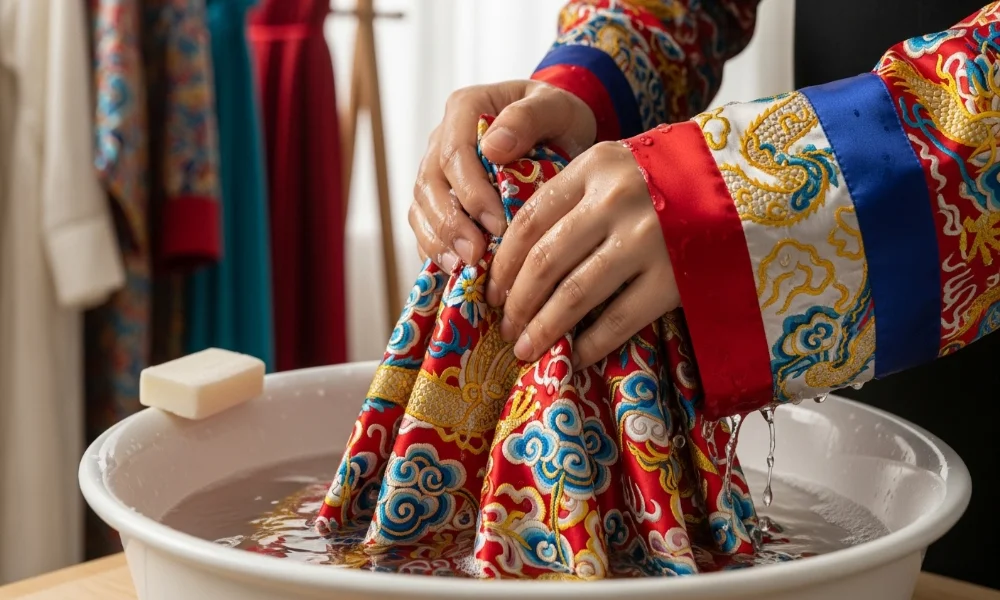
Taking care of traditional Chinese clothing keeps it beautiful for years. Always hand wash silk and embroidered garments with mild detergent. Avoid direct sunlight when drying to preserve color and texture. Linen and cotton outfits can be machine washed on gentle cycles.
Store your attire in breathable garment bags with moth repellents. Avoid folding delicate fabrics to prevent creases or damage. Iron gently on low heat if necessary. With proper care, your traditional Chinese outfit will remain timeless and elegant.
FAQs
1. Is Chinese dress for men only for cultural events?
No, many people wear them casually or during festivals for comfort and pride.
2. What’s the difference between Hanfu and Changshan?
Hanfu is ancient and loose-fitting, while Changshan is a later, fitted robe.
3. Can I wear Hanfu in daily life?
Yes, modern Hanfu styles are light, stylish, and easy to maintain.
4. How do I choose the right size?
Always check size charts or consult a tailor before buying online.
Conclusion
Traditional Chinese dress for men combines beauty, history, and identity. From Hanfu’s flowing elegance to Tang suits’ festive charm, each style tells a story. Wearing these garments isn’t just about fashion—it’s a bridge to culture and pride. Explore, wear, and celebrate the timeless legacy of Chinese attire with confidence and respect.